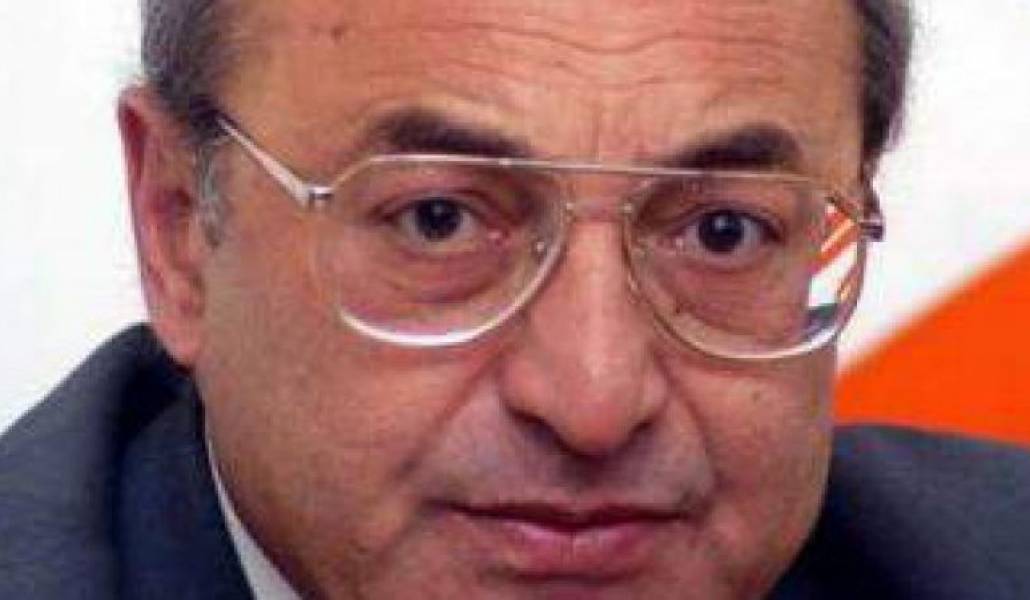
Vazgen Manukyan: "Face-off is excluded"
The opposition-government dialogue can lead to early presidential elections, according to the main opposition alliance Armenian National Congress (HAK). Even Davit Harutyunyan, the leader of the government team tasked with negotiating with the HAK, announced the group is ready to discuss opposition demands, including the issue of snap elections.
However, Vazgen Manukyan, the leader of the National-Democratic Union (AZhM) and chairman of the Public Council of Armenia holds a different opinion about the dialogue.
- Mr. Manukyan, after the first round of talks between the opposition and government you announced that there are not political premises for snap elections. If so, what is the purpose of the first meeting, which was held at the premises of the Public Council headed by you?
I think that the dialogue is belated. After the tragic events of March 1-2, 2008, the country's authorities repeatedly called on the opposition to start talks. The authorities' behaviour was quite natural and comprehensible. They took a series of actions to mitigate the situation, in particular the government declared an amnesty, lifted the ban on mass media, and sanctioned opposition's rallies. The opposition had two options: either to take radical measures or start talks with the authorities. The HAK missed its chance to start a dialogue earlier, which resulted in the decline of its influence. Today the authorities are unlikely to take drastic measures, hence the dialogue is incomprehensible for me.
- Will the sides head for a showdown in the fall?
Face-off is excluded as the election campaign starts in the fall. They can apply sharp rhetoric during the elections but the whole election campaign will be, on the whole, smooth or natural. I do not expect major surprises or unexpected scenes.
- Mr. Mnaukyan, you also announced that the power change would give nothing to the country as authorities change while problems remain. As an experienced political figure, do you see any way out of the given situation?
There are certain issues, mainly strategic, which always remain unsettled no matter who is in power. Other issues are easy to handle depending on the person who governs the country. Much depends on persons. The opposition missed its chance to force the authorities to make changes in economy and legal system. Today we are at the threshold of new elections and I think that the outcome is clearly predictable. I do believe that one day Armenia will hold free and fair elections. Before that, we must be able to work with authorities. We need not expect only evil from them. We should pressurize and assist them in certain issues. I have chosen this path for me.
- Under what conditions will the free and fair elections you have mentioned take place?
It is difficult for me to answer the question as before 1995 I was convinced that elections were always fair and transparent in Armenia. However, after 1995-96, all my efforts to influence on the conduction of elections were doomed to failure. Even today, I do not see a solution. However, I think that we should take efforts to better living conditions. Besides, certain officials should be replaced. We have to pass a difficult road to democracy building and fare elections.
- You said that you do not see political premises for snap election. And what about social premises? Is power change possible given the grave socio-economic situation in the country?
You are speaking clever things. Many people today live in grave social conditions. The country has been unable to surmount the crisis. I think that social groups could take their demands to the street, as was the case in European countries.
People do not struggle for their rights in Armenia; they struggle for power change. Students, peasants, teachers and trade unions can organize demonstrations to represent their demands to the government. In this case, the struggle will be more fruitful and beneficial.
- Mr. Manukyan, the social groups you have just mentioned recently went out to the street in an effort to protect their rights. Among them are taxi drivers, street traders, peasants, parents of the March 1 victims and others.
But it did not gather momentum. These are small streams, which do not flow into a river. Opposition always struggles for power, only the ways of struggle have changed. This should be accompanied by a social struggle which is not the case in Armenia.
Gayane Arustamyan